Kim Warren builds the case for a strong understanding of key resources and the strategic architecture, taking a retail example. He concludes with Marks and Spencer as the case in point illustrating the effect of not doing so with a look at their problems in the late 1990's.
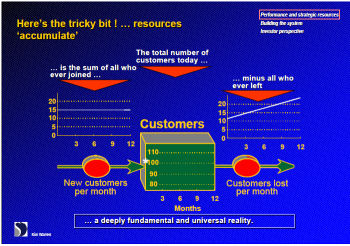
Using Marks and Spencer as the case in point Kim Warren illustrates the dangers of not understanding the importance of a strategic architecture of the firm.
The slides describe how the sophisticated financial tools used to evaluate firms' performance need to be based upon equally rigorous evaluation of its strategic architecture. The dangers that arise from failure to build this solid analysis are illustrated by the history of Marks & Spencer PLC, which suffered an earning collapse between 1998 and 2000, and remains in severe strategic difficulties into 2001. M&S's reported earnings continued to grow through 1995-1998, even though clear, extensive evidence was already accumulating to show that the firm's business system was becoming irreparably damaged. Stock-market analysts continued to push for ever-rising operating returns (which were already well ahead of industry rivals), whilst ignoring the underlying damage. This ill-informed pressure, to which management responded with ever-tougher performance controls, played a substantial role in bringing about the subsequent problems at Marks & Spencer.